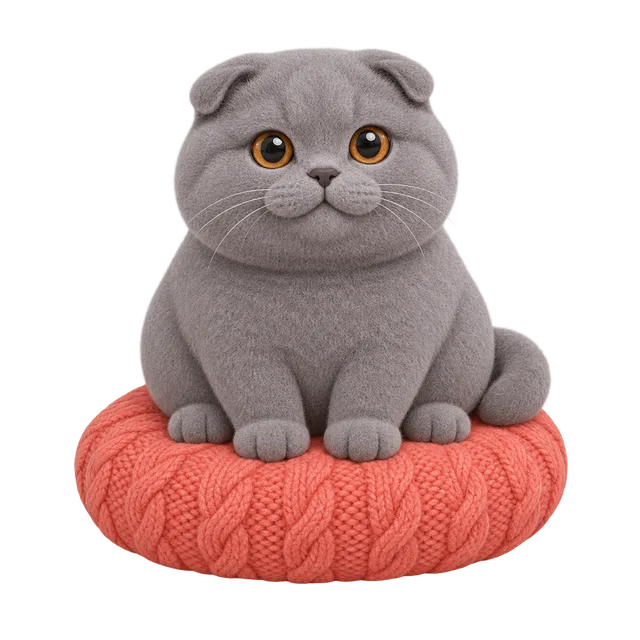
Scottish Fold Personality & Traits
Put comfort and regular veterinary checks first. The gene variant associated with folded ears also affects cartilage and bone development and is linked to osteochondrodysplasia, which can cause pain and joint disease. Severity varies; appearance or activity alone cannot diagnose an individual cat. Seek veterinary advice for changes in movement, jumping or grooming, and provide low-entry litter trays, non-slip routes and accessible resting places. Do not choose a companion for folded ears or encourage breeding for this trait.
You saved me a comfortable spot beside you again. I like sharing the day quietly, meeting your eyes and tapping a little toy when I feel like playing. Let me approach first, and a gentle greeting will help me feel at ease. If I move differently today, please check whether I am comfortable rather than assuming I am simply being quiet. We can choose games that suit how my body feels instead of asking for high jumps. My shape is not what matters most about me. I want to build a warm daily life with someone who notices my feelings and puts my comfort first.
Detailed description
The Scottish Fold originated in Scotland and is often described as affectionate and interested in quiet companionship. ISFJ is a playful comparison for that gentleness, not a rule about an individual cat's temperament. Comfortable, pain-aware care should come first. The genetic mutation responsible for folded ears affects cartilage and bone development throughout the body, not just the ears, and is associated with osteochondrodysplasia. This condition can cause painful joint changes and difficulty moving, but a photo or breed label cannot predict an individual cat's symptoms or progression. Arrange regular veterinary checks and notice changes in walking, jumping, grooming, and litter tray use. Reluctance to move or limping should prompt veterinary advice rather than being dismissed as a personality trait. Provide nonslip surfaces and accessible resting places, and discuss suitable play and any pain management with your vet. Base care on the health and welfare of the cat already sharing your life, rather than on appearance.
Reference data already registered in the service
Weight converts VCA’s adult 6–13 lb range to kg; lifespan follows the same reference. Neither guarantees an ideal weight or years in good health. Five-point scales are editorial, not validated ratings. Do not assume low activity means a calm temperament; discuss possible pain with a vet. Beginner suitability reflects lifelong healthcare demands, not personality.
- Origin
- United Kingdom (Scotland)
- Reference weight range (kg)
- 2.7~5.9
- Reference lifespan (years)
- 14~16
- Activity
- 2/5
- Affection
- 4/5
- Shedding
- 3/5
- Beginner suitability
- 1/5
A closer look
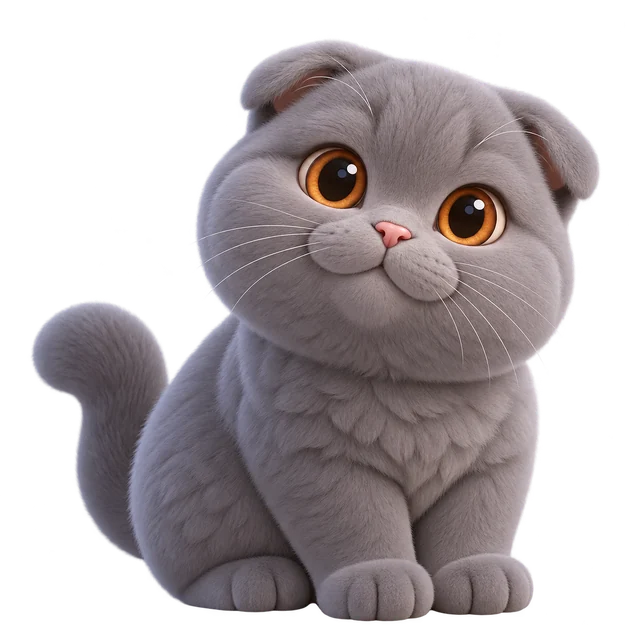
Face, ears and eyes 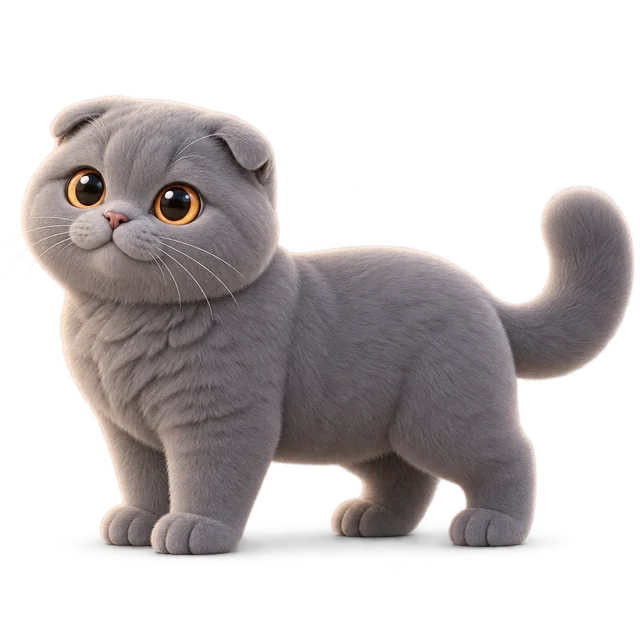
Side profile and build 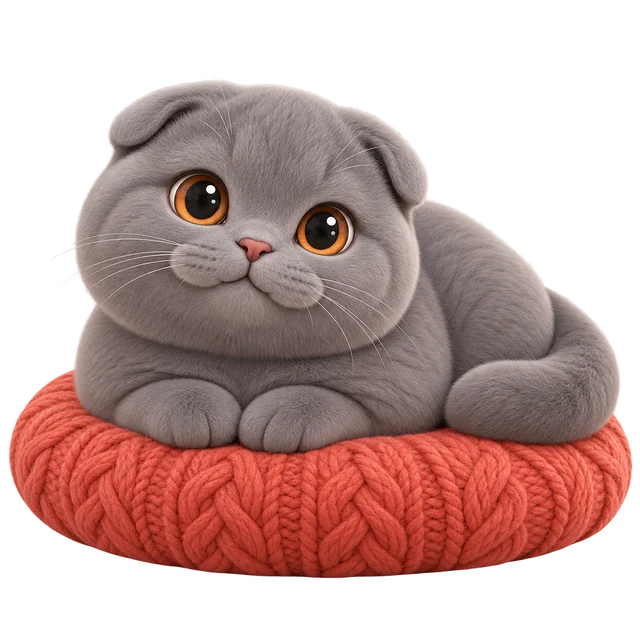
Resting pose
These are generated clay-character images that show the typical look of the breed. Coat colour and build vary from cat to cat, even within a breed.
Sources and access dates
Home-fit reference
They suit attentive guardians who enjoy gentle companionship and can notice subtle changes in behavior. A home able to maintain regular veterinary care and adapt everyday routes and resting places to the cat's comfort is especially helpful.
Suggested items
Consider a 'low-entry litter tray', 'nonslip mats', and a 'gentle ramp' to a favorite resting spot. Choose equipment according to the individual cat's mobility and your veterinary team's advice.